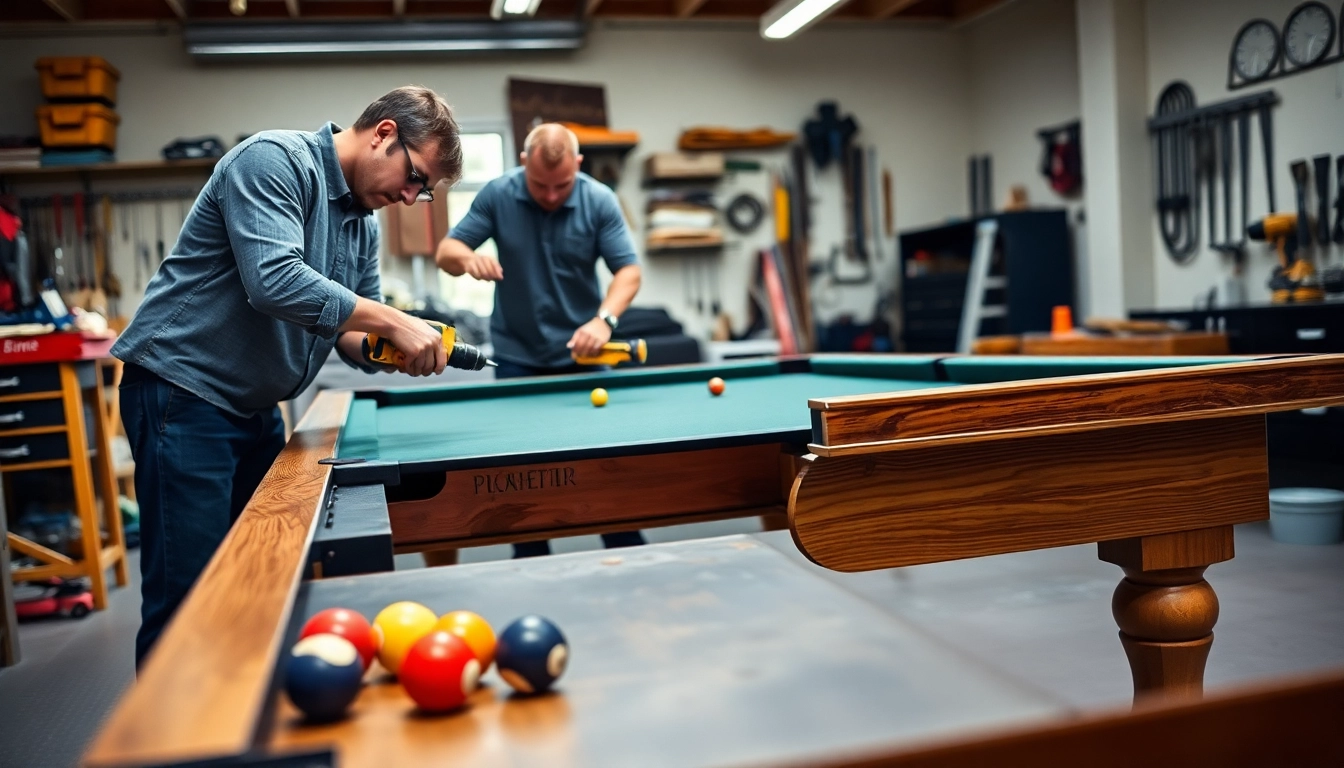
Understanding Pool Table Disassembly
What is Pool Table Disassembly?
Pool table disassembly refers to the process of taking apart a pool table, typically for purposes such as moving, repairing, or refurbishing. This intricate procedure involves separating various components including the legs, slate, and rails. Each part of the table serves a critical function in maintaining its integrity and playability, making the disassembly process both technical and delicate.
Why Disassemble a Pool Table?
There are several reasons one might need to Pool Table Disassembly:
- Moving: A pool table is heavy and bulky. Disassembly allows for easier transport and minimizes the risk of damage during relocation.
- Repair or Refurbishment: Over time, felt can wear out, and bumpers may deteriorate. Disassembling the table can facilitate repairs and updates.
- Storage: If you don’t have adequate space, disassembling the pool table can help in efficient storage.
- Space Adjustment: If you are reorganizing your room or moving to a different location with limited space dimensions, disassembly is essential.
Common Tools Needed for Pool Table Disassembly
To ensure a smooth disassembly process, several tools are essential:
- Socket Wrench: Often necessary for removing bolts and screws.
- Power Drill: Useful for unscrewing stubborn bolts at a quicker pace.
- Staple Remover: Required to pull up the felt from the table's slate.
- Pliers: Handy for gripping and pulling difficult components.
- Measuring Tape: Important for measuring segments, especially if the table needs to fit through tight spaces.
- Helper: Having an extra person is invaluable for managing heavy components, particularly the slate.
Preparing for Pool Table Disassembly
Assessing Your Pool Table Model
Before beginning the disassembly, it is crucial to identify your specific pool table model. Different manufacturers may have unique assembly mechanisms that require special attention. Familiarize yourself with the construction and consult the user manual if available. You may find instructional videos online, helping you visualize the disassembly process before starting.
Gathering Essential Tools
Prepare all necessary tools beforehand. Make a checklist of the tools mentioned above, as having everything at hand will prevent interruptions and make the process smoother. Consider gathering storage containers for small parts and hardware to keep things organized.
Setting Up Your Workspace
Choose an open area with ample space to work. Clear the workspace of any unnecessary items and lay out protective coverings like blankets or tarps where you’ll place disassembled parts. This will help protect the table's finish and prevent scratches or damage during disassembly.
Step-by-Step Pool Table Disassembly Instructions
Removing the Pool Table Legs
Start with removing the legs, as this reduces the table's height, making further disassembly easier. Most legs are bolted, so use an appropriate socket wrench to unscrew each leg carefully. Handle each leg cautiously as they may be heavy, and store them in a safe location to avoid damage.
Disassembling the Slate
The slate is one of the heaviest components of the pool table and requires notably careful handling:
- Locate the bolts that secure the slate to the table frame; these are usually found underneath the table.
- Use a power drill or socket wrench to remove the bolts, remembering the order of removal for easier reassembly.
- Once the bolts are out, carefully lift the slate piece, preferably with an assistant, as it can weigh between 200-300 pounds.
- Place the slates on a safe surface, ensuring they are level to prevent bowing or cracking.
Taking Apart the Rails and Pockets
Next, remove the rails, starting with the pockets. Here’s how:
- Start by removing the staples or screws securing the pockets to the rails.
- Unscrew the bolts holding the rails to the table frame.
- Once unscrewed, carefully lift the rails off the table.
- Organize and store the pockets and rails separately for reassembly, labeling them if possible to avoid confusion.
Handling Pool Table Components Safely
Best Practices During Disassembly
To ensure safety and preserve the integrity of each part, follow these best practices:
- Always wear gloves to improve grip and protect your hands.
- Handle heavier components, like the slate, with care and utilize a lifting technique to reduce strain on your back.
- Stay organized; avoid scattering parts to make reassembly easier.
- Ensure that children and pets are at a safe distance from the disassembly area.
How to Handle Heavy Slate Safely
Slate is not only heavy but also fragile. Thus, when handling it:
- Use proper lifting techniques: bend your knees, keep your back straight, and lift with your legs.
- Always have help when moving slate; two people should carry slate sections.
- Use a slate dolly to transport the slate if you are moving it to a different room or location.
Storing Parts for Reassembly
Once disassembled, keeping track of all parts is critical. Consider the following storage tips:
- Store bolts, screws, and small hardware in labeled bags.
- Use blankets or foam padding to protect the slate and any other sensitive components from scratches.
- Keep everything in one designated area to streamline the reassembly process.
Hiring Professionals vs. DIY Pool Table Disassembly
When to Hire Experts for Pool Table Disassembly
While many individuals can disassemble their pool tables, hiring professionals may be a wise option under certain circumstances:
- If the table is particularly heavy or oversized, professionals can handle it with ease.
- When you lack the necessary tools or experience for disassembly.
- If you are concerned about damaging valuable components, particularly the slate.
Cost Considerations for Professional Services
The cost of professional pool table disassembly varies based on several factors, including location and table type. On average, expect to pay around $400, but this can increase if special tools or extensive labor is required. Always ask for a quote beforehand and inquire about guarantees related to their services.
How to Choose a Reliable Service Provider
Selecting the right professionals for pool table disassembly is crucial:
- Research local companies with strong reputations. Look for reviews and testimonials online.
- Ask for recommendations from friends or family if they have had similar services performed.
- Ensure they have experience specifically in disassembling your model of pool table.
FAQs about Pool Table Disassembly
How long does it take to disassemble a pool table?
Disassembling a pool table typically takes about 2-4 hours, depending on your experience and the table's complexity.
Can I disassemble a pool table alone?
While it's possible, it's recommended to have at least one helper due to the weight of certain components, such as the slate.
Is it safe to move a fully assembled pool table?
Moving a fully assembled pool table is not advisable due to its weight and structure, which can cause damage. Disassembly is crucial for safe transport.
How do I know if my pool table needs disassembly?
Disassembly is necessary when relocating the table, making repairs, or if you wish to refurbish the felt or rails.
What tools are needed to disassemble a pool table?
The essential tools include a socket wrench, power drill, staple remover, pliers, and a measuring tape for accurate measurements.