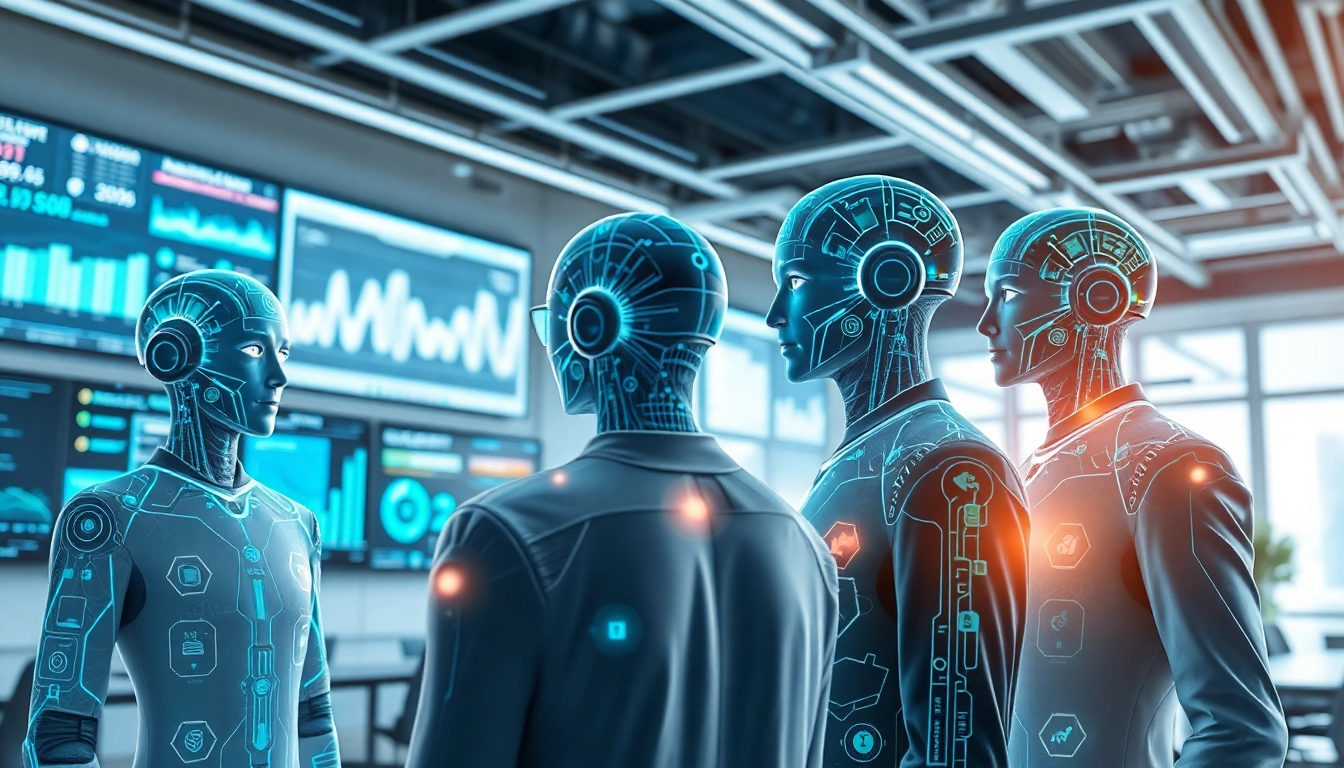
Introduction to Ai agents
In recent years, the term Ai agents has become increasingly prevalent, signaling a transformative shift in how technology interacts with our daily lives. But what exactly is an Ai agent? At its core, an Ai agent refers to a software system designed to autonomously perform tasks, make decisions, and learn from its environment to fulfill goals. With the rise of artificial intelligence (AI), these agents have evolved and are now pivotal to various applications across industries, enhancing efficiency and user experiences. In this article, we will delve into the definition, characteristics, evolution, importance, and functionality of Ai agents, alongside their applications, challenges, and the future landscape.
Definition and Key Characteristics of Ai agents
An Ai agent can be defined as a synthetic entity or software framework that operates within its environment with a certain degree of autonomy. Key characteristics of Ai agents include:
- Autonomy: Ai agents operate independently, making decisions based on programmed algorithms and learned experiences.
- Learning Capability: These agents utilize various learning techniques, such as machine learning and deep learning, to adapt and improve over time.
- Perception: They can retrieve information from their environment, whether through data streams, sensors, or user inputs, to inform their actions.
- Goal-Oriented Behavior: Ai agents are typically driven by objectives—whether executing a routine task or solving complex problems.
- Interactivity: They can engage with users and other systems, thereby fostering collaborative workflows.
The Evolution of Ai agents in Technology
The evolution of Ai agents can be traced back to early artificial intelligence systems, which often required considerable human input to function effectively. Over the decades, advancements in AI research, algorithm design, and computational power have led to the emergence of sophisticated Ai agents. The introduction of machine learning enabled these agents to process vast datasets, drawing insights and adapting without explicit reprogramming. Today, ongoing developments in natural language processing and computer vision have further enhanced the capabilities of Ai agents, enabling applications that range from virtual assistants to complex decision-making systems.
The Importance of Ai agents in Modern Business
In the realm of business, Ai agents are transforming operations and strategic approaches across various sectors. Their importance can be highlighted through the following aspects:
- Efficiency: By automating repetitive tasks and streamlining workflows, Ai agents free up human resources for more strategic endeavors.
- Enhanced Decision Making: Ai agents analyze data patterns and provide insights, aiding decision-makers in formulating strategies based on real-time analytics.
- Personalization: Tailoring user experiences is easier with the help of Ai agents, who can understand user preferences and suggest relevant actions.
- Cost Reduction: By minimizing human errors and optimizing processes, the implementation of Ai agents can result in significant cost savings for organizations.
How Ai agents Function
Mechanics Behind Ai agents Execution
The functioning of Ai agents is rooted in their technical design, which typically consists of various components working together. These include:
- Input from Environment: Ai agents perceive input from various sources, which may include user commands, sensor data, or digital information from databases.
- Processing Unit: This component processes the gathered information using algorithms to determine the best course of action.
- Decision-Making Module: Based on analysis, the agent makes autonomous decisions regarding task execution.
- Feedback Loop: Following execution, agents gather feedback to evaluate their performance, allowing them to learn and adapt for future tasks.
Learning and Adaptation in Ai agents
One of the most crucial aspects of Ai agents is their ability to learn and adapt over time. Machine learning algorithms empower these agents to draw conclusions from data, adjusting their behavior based on newfound knowledge. Techniques such as supervised learning, unsupervised learning, and reinforcement learning are employed to enhance their decision-making capabilities. For instance, in supervised learning, Ai agents are trained using labeled datasets, while reinforcement learning involves the agent discovering actions leading to the most favorable results through trial and error.
Common Algorithms Used in Ai agents
A variety of algorithms underpin the functionality of Ai agents, including:
- Decision Trees: These models help agents decide on actions based on detailed criteria.
- Neural Networks: Often used for tasks involving pattern recognition, they enable agents to process complex datasets.
- Genetic Algorithms: Mimicking natural selection, these algorithms are beneficial for optimization problems.
- Natural Language Processing (NLP): NLP techniques allow Ai agents to understand and produce human language.
Applications of Ai agents
Use Cases in Various Industries with Ai agents
The applications of Ai agents are vast and prevalent across numerous industries. Here are a few notable examples:
- Healthcare: Ai agents assist in diagnosing diseases, managing patient records, and providing telemedicine services.
- Finance: By analyzing market trends and predicting fluctuations, Ai agents aid in investment decisions and risk management.
- Retail: Personalized shopping experiences are achieved through Ai agents that analyze consumer behavior and preferences.
- Manufacturing: Ai agents optimize supply chains and improve inventory management by predicting demands.
The Impact of Ai agents on Customer Experience
When it comes to improving customer experience, Ai agents are having a profound effect. They can handle inquiries round the clock through chatbots, providing instant support and recommendations. This immediate assistance leads to higher customer satisfaction rates and improved engagement. Furthermore, by analyzing interactions, companies can refine their services and better meet customer needs over time.
Future Trends for Ai agents in Business
The future of Ai agents promises advancements such as enhanced collaboration capabilities, greater cognitive abilities through quantum computing integration, and more personalized user experiences driven by deeper insights into consumer behavior. As technology continues to evolve, we can expect Ai agents to play a pivotal role in navigating complex business landscapes, making more autonomous decisions, and engaging seamlessly across various channels.
Challenges and Solutions for Implementing Ai agents
Overcoming Technical Challenges with Ai agents
Despite their potential, implementing Ai agents is not without challenges. Organizations may encounter issues such as system integration, data privacy concerns, and the need for continuous updates to algorithms. To overcome these challenges, companies can invest in robust infrastructure, ensure compliance with data protection regulations, and establish ongoing evaluation protocols to maintain relevance and efficiency.
Ethical Considerations for Ai agents Deployment
Ethics play a crucial role in the deployment of Ai agents. Concerns arise regarding bias in decision-making algorithms, the potential for job displacement, and the need for accountability in agent actions. Organizations must prioritize transparent practices, bias remediation strategies, and develop clear ethical guidelines that govern the use of Ai agents in their operations.
Performance Metrics for Ai agents Effectiveness
Establishing effective performance metrics is imperative for assessing the success of Ai agents. Key metrics may include:
- Accuracy: The ability of the agent to deliver correct results based on input data.
- Response Time: Measuring how quickly the agent executes tasks.
- User Satisfaction: Gathering feedback on user interactions with Ai agents.
- Adaptability: Evaluating how well the agent learns from experience and adjusts its actions accordingly.
FAQs about Ai agents
What are the capabilities of Ai agents?
Ai agents can process multimodal information, engage in conversations, reason, and learn. They facilitate transactions and enhance business processes, delivering intelligent and context-aware actions.
How can businesses implement Ai agents?
Businesses can implement Ai agents by identifying target tasks for automation, selecting appropriate technologies, ensuring data availability, and continuously evaluating agent performance for enhancements.
Are Ai agents cost-effective?
Yes, Ai agents can be cost-effective, especially in automating routine tasks, improving efficiency, and reducing human errors, ultimately leading to significant cost savings for organizations.
What industries benefit most from Ai agents?
Industries such as healthcare, finance, retail, and manufacturing significantly benefit from Ai agents due to enhanced efficiency, accuracy, and personalization in their operations and customer interactions.
How do Ai agents learn and improve?
Ai agents learn and improve through machine learning algorithms that enable them to analyze data, recognize patterns, and adjust their behaviors and strategies based on acquired knowledge over time.